






I set out on a solo journey through Chad—one of the world’s least visited countries to witness the remarkable transformation of Zakouma National Park. Once devastated by poaching, the park’s wildlife is returning due to dedicated conservation efforts. Along the way, I encountered diverse cultures, including nomadic communities whose lifestyles offer a stark contrast to our own. The stunning scenery and unique experiences made this road trip not just about reaching a destination, but also about witnessing a culture and landscape that most people will never see.
I spent a lot of time getting ready for my trip to Chad. Communication took some patience—when emailing my accommodations, I translated everything into French. Corresponding with my driver on WhatsApp was also hit or miss since he was sometimes in remote areas without internet access. I made sure to research the safety precautions I needed to take before arriving.
Language was another big focus. English isn’t widely spoken, with French and Arabic being the official languages. I did my best to learn as much French as I could ahead of time, but once I landed in Chad, most of it flew right out the window.
Arriving in N’Djamena, Chad’s capital, in the early evening, my flight arrived about fifty minutes ahead of schedule. The immigration process was swift, with a routine check confirming my yellow fever vaccination, I was out of the airport within five minutes.
Due to my early arrival, there was no one at the airport to meet me. Thankfully, an airport employee offered me his phone to call Tarif from African Parks. Shortly after, Tarif arrived and drove me to La Résidence Hotel, which was located just a five-minute walk from the airport.
The hotel has high security, requiring guests to pass through two security gates, and vehicles are inspected with a mirror-tipped pole to check underneath.
At the hotel, I met Hassane from Eyte’ Voyages, who would be my driver for the road trip to Zakouma National Park. We further discussed the details of our journey, which would be divided into two days. Some guests I spoke to at Zakouma completed the trip in just 11 hours. For those who prefer not to travel by road, there’s also a two-hour flight option available.
The next morning, after a restful night and a hearty breakfast, Hassane met me at the hotel, and we set off on our journey. It wasn’t long before we left the city behind, and the traffic thinned out considerably. Some stretches of the road were smooth, but others were riddled with potholes, causing Hassane to swerve frequently. On a few occasions, I bounced in my seat so much that I thought my head might hit the vehicle’s roof. Despite the bumps and discomfort, this road trip offered an incredible glimpse into a landscape and culture completely removed from Western familiarity—an experience that very few people will ever have the opportunity to witness.
Villages and towns dotted the roadside, where I witnessed people living without electricity, collecting long grass and water from designated pumps, herding their cattle, and using animals as their primary mode of transportation.
Beyond the villages, I was intrigued by the black Arab nomads who migrate between the northern and southern parts of Chad, following the rainfall. Their campsites were easily distinguishable from those of the villagers, as they lived in non-permanent structures. Hassane explained that their diet consisted of millet, sugar, and milk. I also learned that there were several types of nomads. For instance, those living around the city of N’Djamena sold their camel milk for a living, while the nomads in remote areas were self-sufficient.
After several hours of driving, we had our first flat tire and had to pull over. It couldn’t have happened in a more memorable spot. We were near a large waterhole being used by hundreds of nomads and their livestock—cows, donkeys, camels, and horses. It was a surreal experience.
Once the tire was fixed, we continued on until it was time to stop for a roadside lunch under a tree. I was vegetarian at the time (now I’m vegan), so all the food Hassane brought was vegetarian. He wasn’t just an excellent driver—he was also a skilled cook and prepared simple but delicious meals that hit the spot.
We continued until we reached the town of Mongo, about 252 miles (406 kilometers) east of N’Djamena. With a population of around 40,000, Mongo felt much larger than any of the towns and villages we had passed earlier in the day.
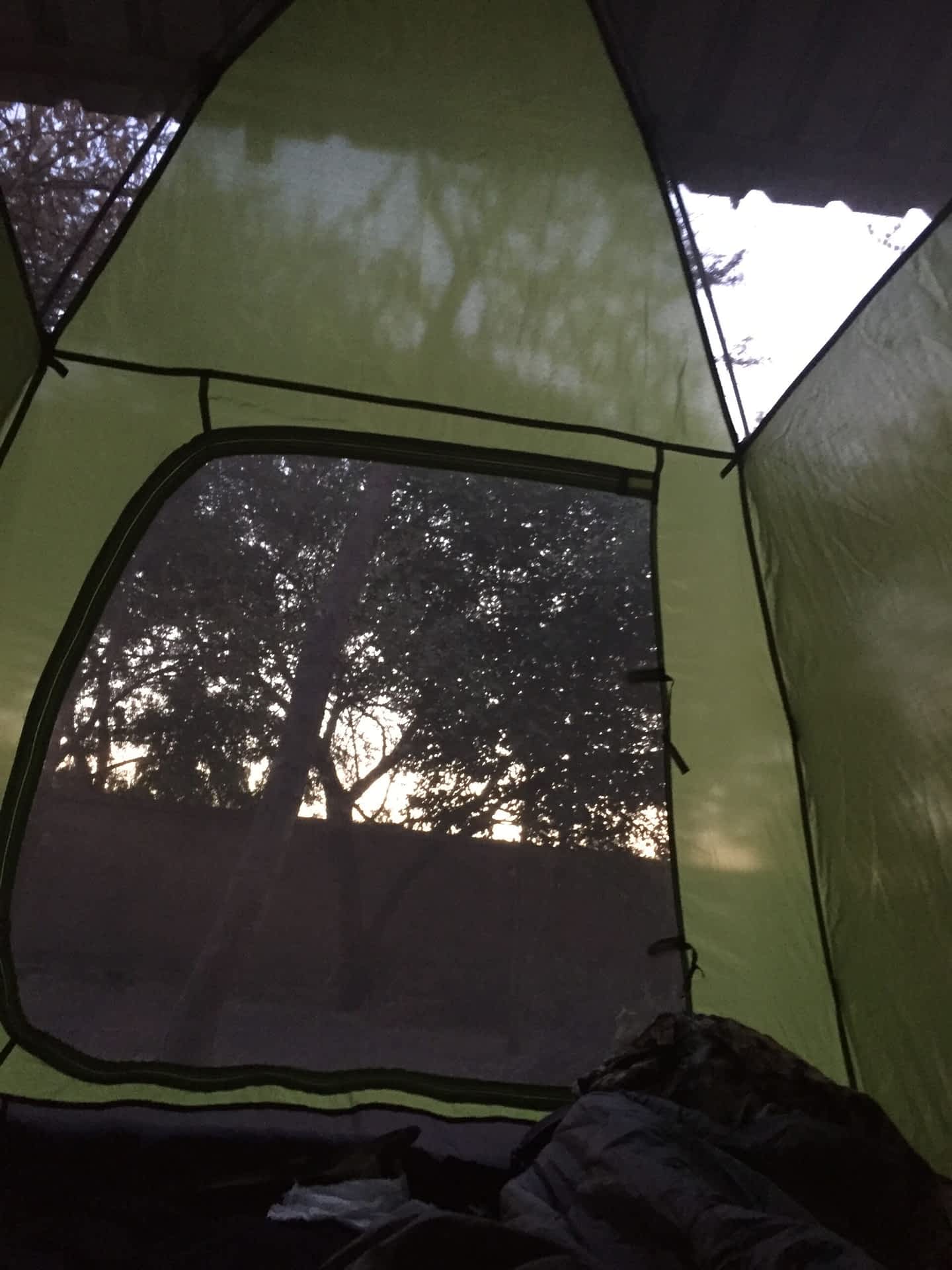
We set up camp on the grounds of a gated Christian compound. My sleeping arrangements were simple—a thin tent with mesh panels so I could see outside. I had brought my sleeping bag, and while the setup was basic, I was perfectly comfortable. Once the sun went down, Hassane got to work cooking dinner in our little backyard under a dark, starry sky.
The bathroom situation was minimal: a toilet without a flush, which meant filling a bucket of water and pouring it down to flush. There was also a basic basin for handwashing. It was all part of the experience. I knew I was camping, and I was perfectly fine with roughing it.
The next morning after breakfast, we left Mongo for Zakouma. As we drove deeper into the country, everything became more remote. With 55% of Chad’s population being Muslim, every small town and village we passed along the picturesque route had a mosque.
It was common to see people stopping to pray throughout the day. Arabic was the dominant language in most of the villages, and many people weren’t used to seeing foreigners. The children, especially, were curious about me—some stared, others waved.
Not long after, we had another flat tire on a remote stretch of road. Luckily, a passing truck full of men stopped to help us out. Once patched up we continued until we reached a village where Hassane could repair his spare tire. Most of the villages we passed seemed to have at least one mechanic, and it wasn’t unusual to see a crowd of kids gathered around to watch and learn as the repairs were done. This village marked our final stop before arriving at Zakouma.
Hassane brought me inside a small hut he said was a local restaurant, where he set about making lunch. Hygiene is always something I take seriously when traveling, especially when it comes to food preparation. Hassane was careful and took all the necessary precautions. I appreciated the effort—and the meal.
After the long journey, we finally saw a sign for Zakouma National Park—100 kilometers to go. When we reached the park boundary, I was surprised to find the entrance unmanned. There was no one there to greet us or check us in.
The roads inside the park had no signage, and many didn’t even look like roads at all. Fortunately, Hassane knew exactly where he was going. Without GPS or a map, he navigated confidently toward Tinga Camp, which would be my home for the next nine days.
As we drove deeper into the park, the wildlife began to reveal itself. The first animals we saw were baboons, followed by guinea fowl (birds) Reminding me I had finally arrived in a truly wild place.
Zakouma’s story is one of devastation and recovery. Over the last few decades, Chad’s wildlife has faced tremendous challenges due to widespread poaching and habitat destruction. Zakouma National Park was one of the hardest hit—between 2002 and 2010, approximately 95% of its elephant population was wiped out by poachers. In just eight years, 4,000 elephants were killed for their ivory.
But change began in 2010 when the Chadian government partnered with African Parks to save what was left. Together, they signed a long-term agreement to restore and manage Zakouma before it was too late. Their efforts have paid off. Elephant numbers are slowly increasing for the first time in decades.
These conservation successes haven’t been limited to elephants. The park has also seen the resurgence of roan antelope, Lelwel’s hartebeest, and the critically endangered Kordofan giraffe—Zakouma is now home to half the world’s remaining population. Buffalo numbers have also bounced back, from just 220 in 1986 to more than 12,000 today.
We arrived at Tinga Camp, which is located along the Salamat River and in the shadow of great tamarind trees. We were welcomed by the camp manager, Max. Since I had missed the afternoon game drive, Max organized a special night drive for me and another guest after dinner. On the night drive, there were multiple sightings of genet, civet, and serval. This was my first time seeing servals in the wild, so I was delighted to see so many.
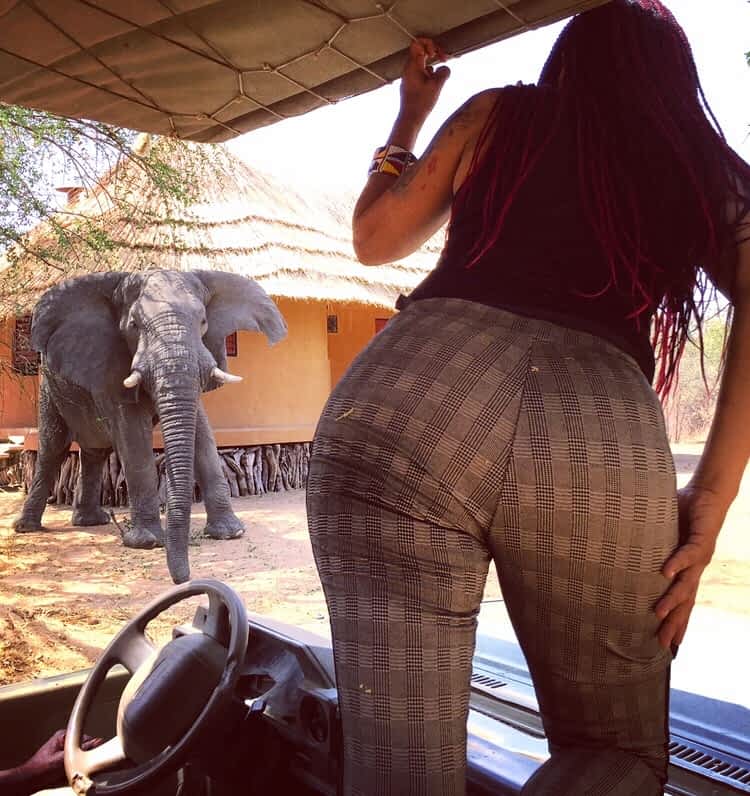
Tinga Camp had no fences, so wildlife could roam freely through the camp. The next morning, I woke up to three buffalo outside my room. Since they are widely regarded as among the most dangerous animals on the African continent, I stood on the steps of my room for about 10 minutes contemplating whether I should leave and go to the dining area. Eventually, I thought it would be safe enough for me to head over to the dining area.
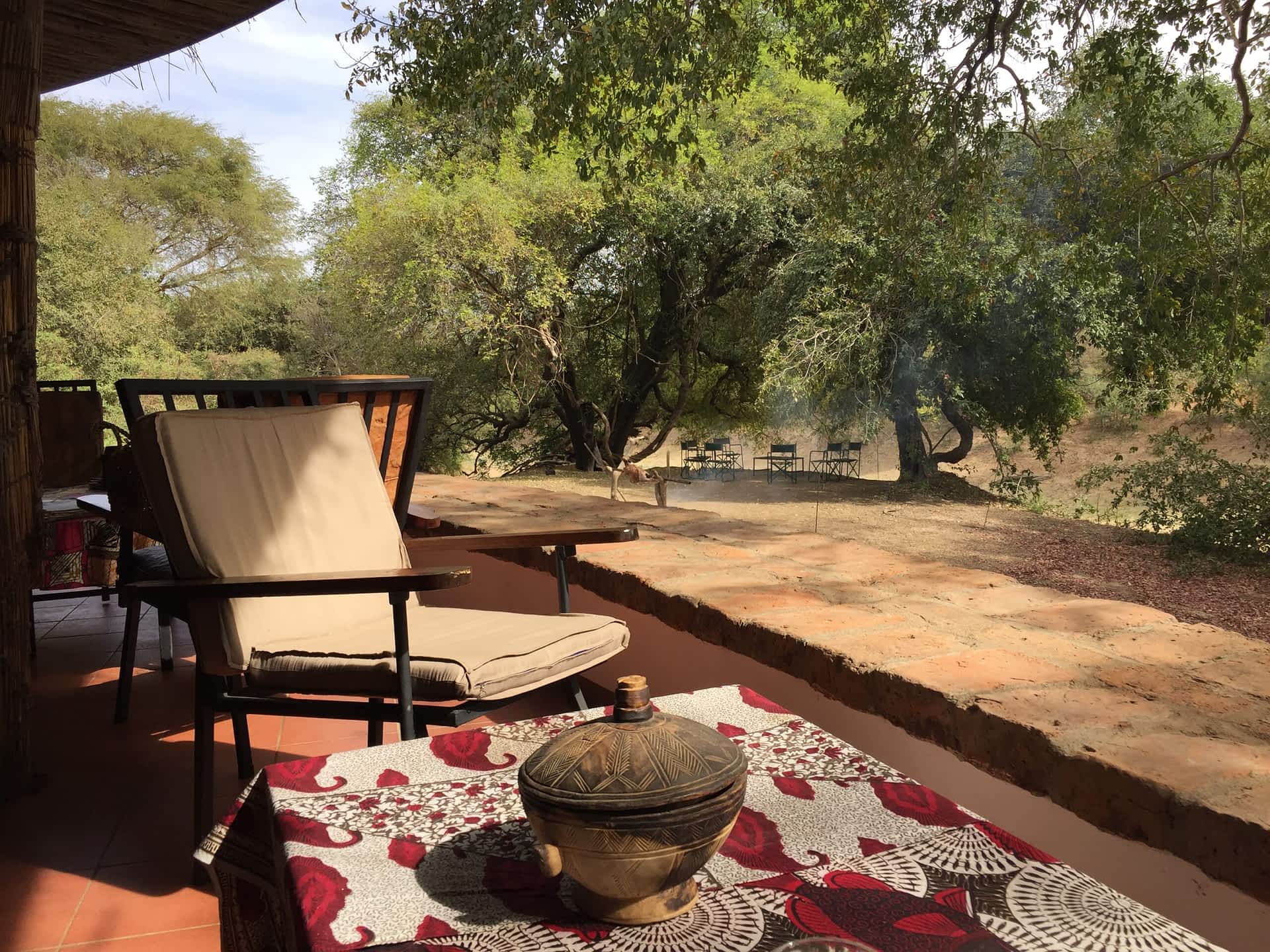
Breakfast every morning was fruit, bread, cereal, tea, coffee, and juice. Lunch and dinner were simple, three-course meals. The food was pretty good considering our remote location. Service was swift, friendly, and well-organized. The camps dining and lounge area is set along the river bank (which was dried up on my visit ) with views of the surrounding bush where wildlife can be spotted.
The camp’s managers, Max and Clair, made an effort to talk to all of their guests, especially Max who was usually there first thing in the morning when I arrived for breakfast and the last to leave at night.
Throughout my stay, I went on several game drives. Since the park has low visitation, it was extremely rare to see another vehicle. In my nine days doing two game drives a day I saw one other tourist safari vehicle and one time I saw a vehicle with kids from the local community on a game drive.
At Tinga Camp, the game drives are shared with other guests. On one of the afternoon drives, I was the only guest, so my guide wanted to take me to find the large herds of elephants, numbering in the hundreds. To reach the large herds, we had to travel quite some distance from the camp.
Along the way, we passed large areas that had brush fires or were smoldering from the fires. Once past the bushfire, we spotted a large waterhole with an abundance of wildlife. My guide was laser-focused on finding the elephants. Once he spotted them, it was not easy to get close.
The herd was very different from other herds that I have observed in Africa as they were extremely skittish. It’s quite bizarre to see the largest land animal in the world run in fear. Unfortunately, this was understandable. It wasn’t long ago that they were being hunted mercilessly by poachers.
Morning game drives turned out to be the best time to observe birds. In the mornings, we saw massive flocks of various species fill the sky as they headed toward the nearby watering holes, it was like rush hour traffic for birds.
On one drive with a group of guests, we again went to find the large herds of elephants. After hours of driving, they were eventually spotted. The herd, which easily numbered in the hundreds, sensed our presence and started to run away. The herd was followed by a large flock of birds called egrets. Egrets ride on the elephants’ backs feeding on parasites and insects that are stirred up from the soil and grass as elephants walk. Egrets also help to protect the herd by sounding the alarm if predators are approaching. This gives elephants a chance to guard their babies against a possible attack. There were quite a few calves in the herd, a great sign that the population is making a comeback. In all my years going on safaris, I have never seen such a large herd of elephants.
Hassane returned to Tinga Camp the night before my departure day. After breakfast, we left for N’Djamena. This time, Hassane brought a different vehicle that was better suited for the bumpy roads. It was a common sight to see people on the side of the road fixing flat tires on their motorbikes, cars, and large trucks. I also saw quite a few that had been totaled from accidents and left on the side of the road, perhaps a reminder to other people to drive safely.
After a long drive, Hassane said we would stop along the roadside at 5:30 PM to set up camp for the night. I had heard many stories about carjackers waiting on the roads, so my first thought was “What about the carjackers?”. I decided to just put my trust in Hassane. We pulled off the road and drove into the bush. Surrounded by nature, and set up cam
While camping in the bush, we only saw a few random people passing through on horse or foot from neighboring villages. They seemed surprised to see us camped out. The evening was spent using a couple of camping lamps to give us light while Hassane cooked a nice meal. We spent the rest of the night chatting and looking up at the sky filled with millions of stars, something you don’t see living in a city.
During the evening, we could hear a call to prayer from a nearby village.
Although we were far from any wildlife reserve, I could hear the loud vocalization made by hyenas from my tent after going to bed, they sounded quite close. When I got out of my tent in the morning, a few horses were around my tent.
After breakfast, we commenced our road trip. At one point, Hassane pointed to my side of the window and said, “Look a caravan!”. It was a magnificent sight. A large group of nomads was migrating in a long line, with their large herds of cattle, donkeys, goats, and all their belongings.
My road trip and stay at Zakouma National Park will always hold a special place in my heart. It was raw, authentic, and refreshingly untouched by commercialization. Being immersed in Chad’s wilderness and culture was a rare privilege—one that few will ever experience—and it reminded me how powerful travel can be in broadening our perspective and deepening our appreciation for the world around us. Zakouma left me inspired by the resilience of wildlife and the quiet strength of the people who protect it.
I was able to talk with Leon Lamprecht, the current park manager, and ranger Zakaria Hassane about their experiences. To read more

Experience Africa at its most authentic. Tailor-Made for you, Crowd-Free